When and Why Do You Need It?
Latest news |
0 Views
Call Connect
You have the qualifications. You know your work. You may even have better knowledge than the person sitting next to you.
But during an interview or presentation, you struggle to explain yourself. Your voice becomes quieter, your answers become shorter, and you leave thinking, “I knew the answer. Why couldn't I say it properly?”
This is exactly where personality development coaching can be useful.
It is not about turning a shy person into an extrovert. It is about helping you communicate your strengths more effectively.
When Should You Consider Personality Development Coaching?
There is no fixed age or career stage for personality development. The right time is when you notice that your behaviour, communication, or confidence is getting in the way of opportunities.
You Have Trouble Presenting Yourself
Your first impression is often created before you have explained your qualifications.
The way you introduce yourself, maintain eye contact, listen to questions, sit or stand, and respond can influence how confident and prepared you appear.
These are skills that can be practised.
You Struggle During Group Discussions
You may have excellent ideas but remain silent because you are unsure when to speak.
Coaching can help you learn how to enter a conversation, make your point clearly, listen to opposing views, and disagree without sounding aggressive.
You Want to Become More Professional
Professional behaviour is not limited to wearing formal clothes.
It includes communicating respectfully, being punctual, listening carefully, handling criticism, speaking appropriately in different situations, and knowing how to interact with people at different levels.
These small behaviours can make a noticeable difference at work.
What Happens in Personality Development Coaching?
A useful coaching programme should involve more than someone standing in front of a class and giving motivational speeches.
You should actually practise the skills.
This may include:
The feedback is particularly valuable because we often do not notice our own communication habits.
You may not realise that you speak too quickly, avoid eye contact, use filler words, or apologise unnecessarily while speaking.
A Practical Example From Our Experience
One of our learners was technically capable but often started his answers with phrases such as “I don't know if this is correct” or “Maybe I'm wrong, but…”
He was not actually lacking knowledge. He had developed a habit of undermining his own answers before giving them.
Through mock interviews and speaking exercises, we worked on presenting his ideas more directly and calmly.
The improvement was simple but important: he started communicating his knowledge instead of apologising for it.
Here's What We Would Challenge
A lot of personality-development advice focuses heavily on “looking confident.”
We think that is only half the story.
Standing straight and smiling can help, but body language cannot permanently cover up poor preparation.
Real confidence comes from knowing what to say, practising how to say it, and becoming comfortable handling unexpected situations.
That is why effective coaching should combine confidence-building with actual communication practice.
Personality Development Is Not About Changing Your Personality
This is worth saying clearly.
If you are naturally quiet, you do not need to become the loudest person in the room.
If you are naturally serious, you do not need to become artificially cheerful.
Good coaching helps you become more comfortable with your own communication style while teaching you how to adapt it when the situation requires something different.
Why These Skills Matter at Work
The World Economic Forum's Future of Jobs Report 2025 highlighted human skills such as resilience, flexibility, leadership, empathy, and active listening as important workplace skills.
Technical knowledge may help you qualify for an opportunity, but communication and interpersonal skills can influence how effectively you work with other people.
For those considering Personality Development Coaching in Vivek Vihar, look for a programme that gives you repeated opportunities to practise these skills instead of simply teaching theories about confidence.
How to Choose the Right Coaching Programme
Before enrolling, ask what the sessions actually involve.
Will you participate in discussions? Will you receive individual feedback? Will you practise interviews and presentations?
A good coaching programme should give you situations where you can make mistakes safely, understand them, and improve.
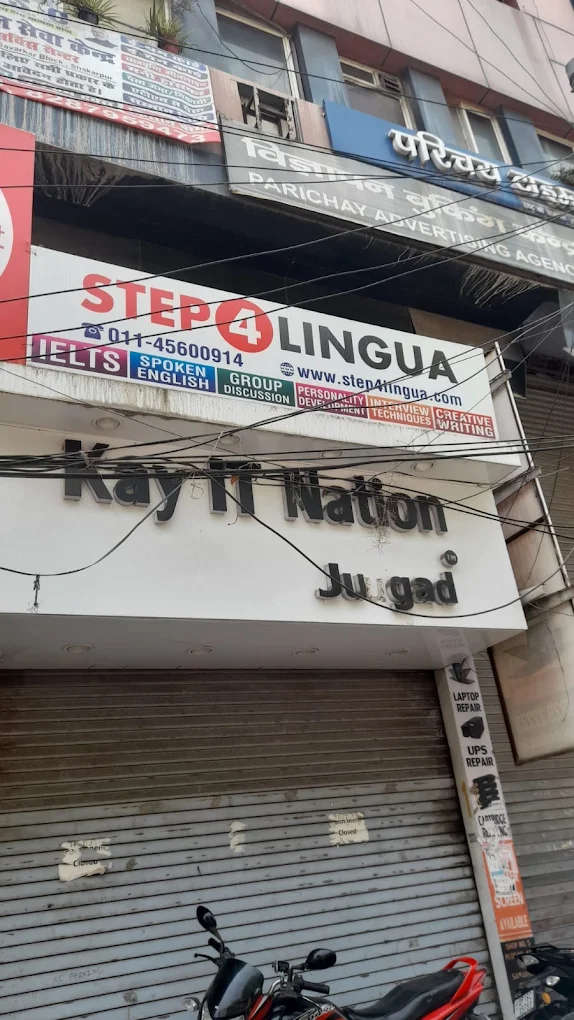
Step 4 Lingua – Learn English for Growth
At Step 4 Lingua, our coaching combines communication practice with confidence-building. Learners work on interviews, presentations, group discussions, body language, professional conversations, and self-expression. The focus is not on creating a “perfect personality,” but on helping each learner communicate their strengths more effectively.
FAQs
What is personality development coaching?
It is structured training designed to improve communication, confidence, presentation, interpersonal skills, professional behaviour, and self-expression.
Can personality development coaching help with interviews?
Yes. Mock interviews, self-introductions, body-language practice, and feedback can help you become more comfortable answering questions and presenting yourself professionally.
Is personality development useful for working professionals?
Absolutely. Professionals can use it to improve presentations, meetings, workplace communication, leadership skills, and interactions with colleagues and clients.
Give Your Skills a Stronger Voice
You may already have the knowledge you need. The next step may simply be learning how to communicate it with confidence.
Talk to Step 4 Lingua about your specific communication challenges and explore a personality development coaching programme built around the skills you want to improve.
- Personality Development Coaching in Preet Vihar
- Personality Development Coaching in Laxmi Nagar
- Personality Development Coaching in Shakarpur
- Personality Development Coaching in Jagatpuri