When Is It Time to Move Beyond Basic English?
Latest news |
2 Views
Call Connect
You can speak English. You can hold a conversation, write emails, and understand what people are saying.
But then comes a presentation, an important client call, or a meeting with senior colleagues—and suddenly, you realise that speaking English and communicating effectively are two different things.
This is where an advanced spoken English course can be useful.
Who Needs an Advanced Spoken English Course?
An advanced course is not necessarily for someone who knows difficult English words. It is for someone who wants to communicate with more clarity, confidence, and control.
You speak English but hesitate in professional situations
Maybe you can chat comfortably with friends but struggle to express your opinion during a formal discussion.
Professional conversations often require more than basic sentences. You need to explain ideas, disagree politely, ask questions, and respond without losing your train of thought.
You repeat the same words
Sometimes your English is grammatically correct but sounds repetitive.
You may keep using the same simple phrases because they are comfortable. Advanced training can help you expand your vocabulary and learn different ways to express the same idea naturally.
You want to improve presentations and public speaking
Giving a presentation is not just about knowing English.
You need to organise your thoughts, speak at a comfortable pace, emphasise important points, handle questions, and keep your audience interested. These are communication skills that improve through practice, not memorisation.
What Makes Advanced Training Different?
Basic English courses generally focus on building a foundation.
Advanced training focuses more on how you use that foundation.
You may work on:
-
Professional conversations
-
Presentation skills
-
Public speaking
-
Group discussions
-
Advanced vocabulary
-
Pronunciation and clarity
-
Fluency and sentence flow
-
Interview communication
-
Workplace communication
-
Handling questions confidently
The goal is not to make your English sound complicated. In fact, strong communication often sounds surprisingly simple.
A Real Example From Our Experience
One of our learners could already speak English fairly well. His problem was that he spoke too quickly during presentations and often used long sentences that made his points difficult to follow.
Instead of giving him more grammar lessons, we focused on presentation practice, pauses, sentence structure, and explaining ideas in shorter sections.
After repeated practice, his presentations became easier to follow and he felt much more comfortable answering questions afterwards.
That is an important distinction: sometimes you do not need more English. You need better control over the English you already have.
The Advice We Would Challenge
A lot of learners believe that advanced English means using impressive vocabulary.
We strongly disagree.
Using a complicated word when a simple one works does not automatically make you sound fluent. Sometimes it does the opposite.
Good communication means choosing the right words for the situation. If you can explain a complicated idea clearly using simple English, that is a skill—not a weakness.
Why Practice Matters More at an Advanced Level
At this stage, simply studying from a book may not be enough.
You need situations that make you think and respond spontaneously. This could include mock meetings, presentations, debates, interviews, role-plays, and real-world discussions.
Feedback is equally important. A trainer can identify habits such as unnecessary pauses, repeated words, unclear pronunciation, weak sentence structure, or speaking too quickly.
For anyone considering an Advance Spoken English Course in Shakarpur, we recommend checking whether the programme gives you enough opportunities to actually speak—not just complete written exercises.
One Industry Stat Worth Knowing
The 2024 EF English Proficiency Index assessed English skills across 116 countries and regions. One useful takeaway is that English exposure by itself does not guarantee strong communication ability.
Regular, active use matters. That is especially true when the goal is professional-level communication.
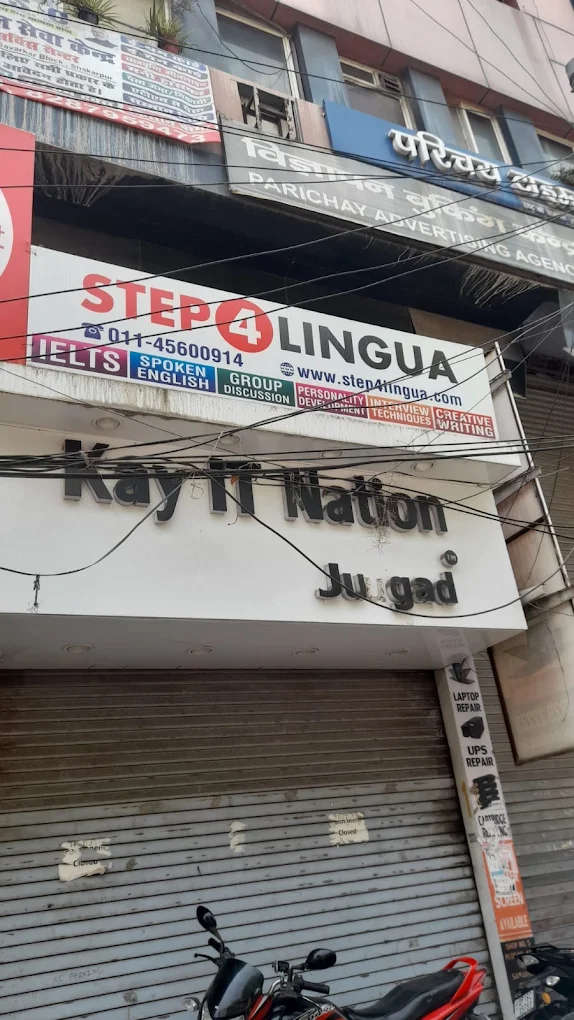
Step 4 Lingua – Learn English for Growth
At Step 4 Lingua, advanced learners work on more than vocabulary and grammar. Our sessions focus on presentations, professional conversations, discussions, fluency, pronunciation, and expressing ideas clearly. The aim is to help learners use English confidently when communication really matters.
FAQs
What is taught in an advanced spoken English course?
It usually covers professional communication, fluency, vocabulary, pronunciation, presentations, public speaking, discussions, interviews, and handling conversations confidently.
How do I know if I need an advanced spoken English course?
If you can already communicate in English but struggle with fluency, professional conversations, presentations, or expressing complex ideas clearly, advanced training may be suitable.
Can an advanced English course improve my confidence?
Yes. Confidence often improves when you repeatedly practise real situations, receive useful feedback, and learn how to handle mistakes without freezing.
Ready to Take Your English to the Next Level?
If you already know English but want to communicate more confidently at work, in interviews, presentations, or professional conversations, it may be time to move beyond basic practice.
Talk to Step 4 Lingua about your current speaking level and find an advanced programme built around the communication skills you actually need.
- Advance Spoken English Course in Preet Vihar
- Advance Spoken English Course in Laxmi Nagar
- Advance Spoken English Course in Shakarpur
- Advance Spoken English Course in Jagatpuri